Guanciale, artichoke and pecorino tagliatelle
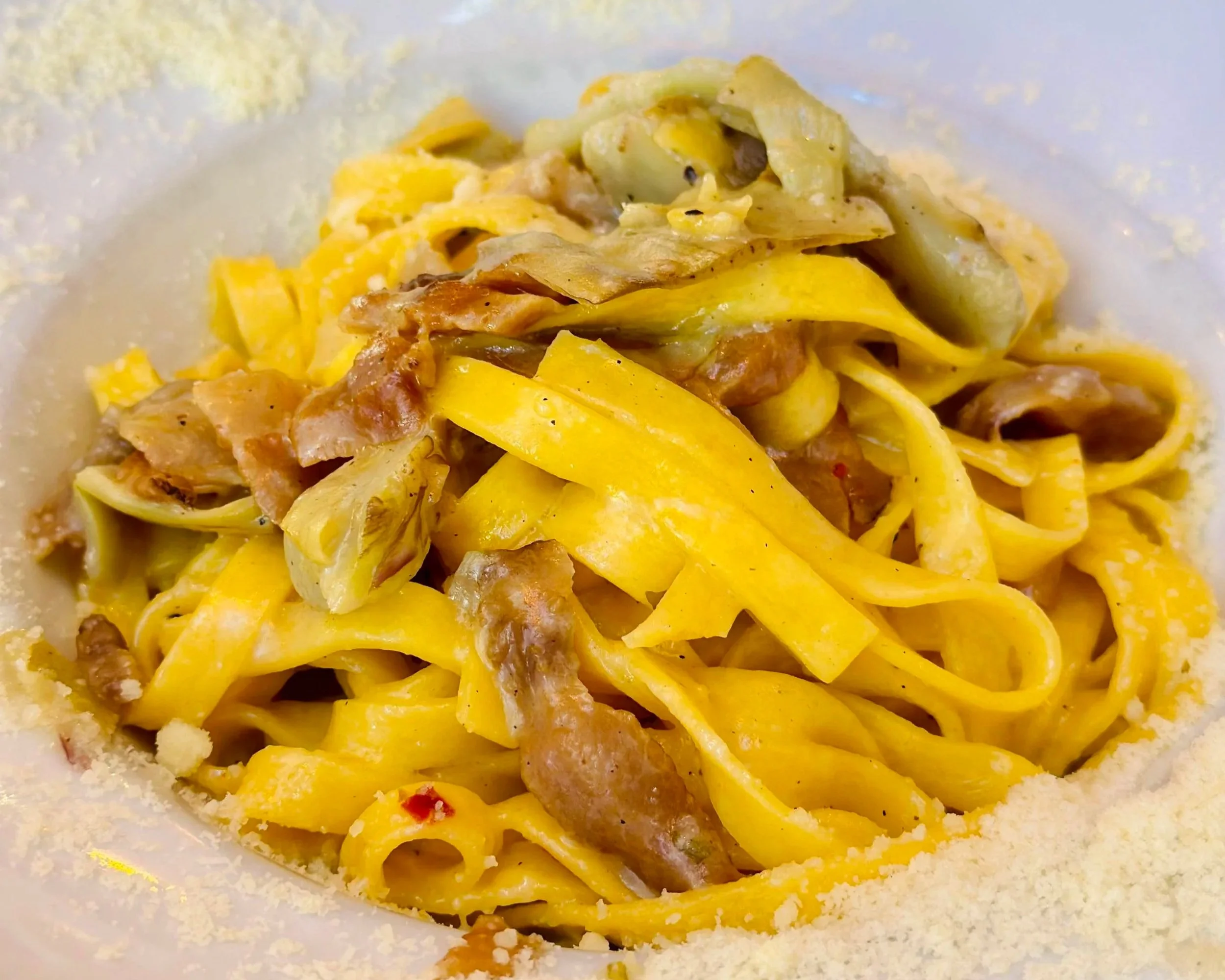
Serves: 4│30 min
This is a rustic yet refined pasta dish that balances rich, cured pork with bright, tender artichokes and sharp Pecorino cheese. Wide tagliatelle ribbons are tossed in a silky sauce made from rendered guanciale fat, garlic, and a splash of pasta cooking water. Sliced artichoke hearts add a pleasant, slightly nutty bite and a touch of sweetness, while grated Pecorino brings salty, tangy depth. Finished with a grind of black pepper and a scattering of fresh herbs, this dish is comforting and elegant—ideal for a cozy weeknight or a simple dinner party.
Ingredients
12 oz (340 g) tagliatelle
6 oz (170 g) guanciale, rind removed and cut into 1/4-inch strips (pancetta can be substituted if needed)
1 lb (450 g) artichoke hearts, trimmed and quartered (fresh or thawed frozen; if using canned, drain and halve)
3 tbsp extra-virgin olive oil
1 small shallot, finely chopped
2 garlic cloves, thinly sliced
1/4 cup dry white wine
1/2 cup reserved pasta cooking water (more as needed)
3/4 cup finely grated Pecorino Romano (plus extra for serving)
1 tbsp fresh lemon juice
Zest of 1 lemon (optional, for brightness)
Freshly ground black pepper
Salt (for pasta water)
Fresh parsley or chives, chopped, for garnish (optional)
Instructions
Prepare pasta water and cook tagliatelle
Bring a large pot of salted water to a rolling boil (about 1 tbsp salt per 4–6 quarts of water).
Cook the tagliatelle until al dente according to package instructions. Reserve 1 cup of pasta cooking water, then drain, keeping the pasta hot.
1.Crisp the guanciale
While the pasta water heats, warm a large skillet over medium heat.
Add the guanciale (no oil needed if it’s fatty). Cook, stirring occasionally, until the fat renders and the strips are crisp and golden, about 6–8 minutes.
Remove the guanciale with a slotted spoon to a paper towel-lined plate, leaving the rendered fat in the skillet.
2. Cook the artichokes and aromatics
Add the olive oil to the skillet with the rendered fat if the pan seems dry.
Add the shallot and cook over medium heat until translucent, about 2 minutes.
Add the garlic and cook until fragrant, about 30 seconds.
Add the artichoke hearts and increase heat slightly. Sauté until they begin to color and soften, about 4–6 minutes.
3. Deglaze and build the sauce
Pour in the white wine to deglaze the pan, scraping up any browned bits. Let the wine reduce by half, about 1–2 minutes.
Stir in 1/2 cup of the reserved pasta water and bring to a gentle simmer. Add lemon juice and lemon zest if using. Adjust heat so the liquid is just simmering.
4. Combine pasta and sauce
Add the drained tagliatelle to the skillet (or return skillet contents to the pasta pot if your skillet is small). Toss to coat, adding more reserved pasta water a few tablespoons at a time if the sauce seems dry.
Remove the skillet from the heat and quickly add the grated Pecorino, tossing briskly so the cheese melts into the sauce and creates a silky coating. Season with plenty of freshly ground black pepper. Taste and add salt only if needed (Pecorino and guanciale are salty).
5. Finish and serve
Fold the crisped guanciale back into the pasta.
Divide among bowls, finish with additional Pecorino, a light drizzle of olive oil if desired, and a sprinkle of chopped parsley or chives.
Serve immediately.
Notes and tips
Guanciale: Traditional and richly flavored. If unavailable, use good-quality pancetta, but reduce added salt afterward.
Artichokes: Fresh are best for texture and flavor; trim to remove the choke and tough outer leaves. If using frozen, thaw and pat dry before sautéing. Canned artichokes are fine—choose hearts in water and drain well.
Cheese: Pecorino Romano is traditional and gives a sharp, salty edge. If you prefer milder flavor, blend Pecorino with grated Parmigiano-Reggiano.
Texture: The key is emulsifying the cheese with hot pasta and starchy water off the heat to create a glossy sauce rather than clumps.
Make-ahead: Cook guanciale and artichokes ahead, cool, refrigerate up to 1 day. Reheat gently and finish with freshly cooked pasta and cheese.

The ultimate seafood pasta with yellow cocktail tomatoes.